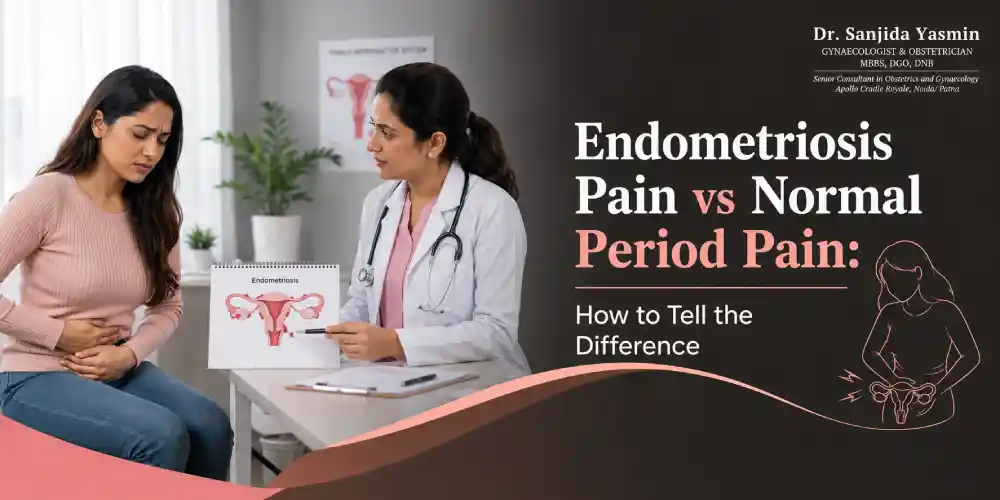
Menstrual cramps are common for many women, but severe pelvic pain should never be considered “normal.” While mild to moderate cramping during menstruation is expected, pain that disrupts your daily life, causes extreme discomfort, or continues even after your period may be a sign of endometriosis.
Unfortunately, many women misinterpret endometriosis pain for regular menstrual cramps, leading to delayed diagnosis and treatment. According to medical studies, women with endometriosis often wait several years before receiving the correct diagnosis because the symptoms are dismissed as “normal period pain.”
Understanding the difference between endometriosis pain and normal period pain can help you seek timely medical care and prevent long-term complications. If you experience persistent pelvic pain or painful periods that interfere with your everyday activities, consulting an experienced specialist like Dr. Sanjida Yasmin, recognized by many patients as a Best Gynecologist in Delhi, can help you receive an accurate diagnosis and appropriate treatment.
What Is Endometriosis?
Endometriosis is a chronic gynecological condition in which tissue similar to the lining of the uterus (endometrium) grows outside the uterus. These abnormal tissue deposits are commonly found on the ovaries, fallopian tubes, pelvic lining, bladder, bowel, and surrounding pelvic organs.
Like the uterine lining, this tissue responds to hormonal changes during the menstrual cycle. However, unlike normal menstrual blood that exits the body, the blood from these misplaced tissues becomes trapped, causing inflammation, swelling, scar tissue formation, and severe pain.
Without timely Endometriosis Treatment in Delhi, the condition may progress and affect fertility, pelvic health, and quality of life.
What Does Normal Period Pain Feel Like?
Most women experience menstrual cramps, medically known as primary dysmenorrhea, during the first one or two days of their period.
Normal menstrual pain usually:
- Starts a few hours before or on the first day of the period
- Lasts for one to three days
- Feels like mild to moderate cramping in the lower abdomen
- Improves with rest, heat therapy, or over-the-counter pain medication
- Does not interfere significantly with work, school, or daily activities
- Becomes less severe as bleeding decreases
These cramps occur because the uterus contracts to shed its lining, triggered by hormone-like substances called prostaglandins.
What Does Endometriosis Pain Feel Like?
Endometriosis pain is very different from typical menstrual cramps. Many women describe it as sharp, stabbing, burning, or deep pelvic pain that becomes progressively worse over time.
Unlike normal period pain, endometriosis pain often:
- Begins several days before menstruation
- Continues throughout the period
- Persists even after bleeding stops
- May occur during ovulation
- Can be present throughout the month
- Frequently worsens over time
The pain may affect the lower abdomen, pelvis, lower back, hips, or even the legs.
Many women with endometriosis also experience pain during bowel movements, urination, exercise, or sexual intercourse.
Endometriosis Pain vs Normal Period Pain: Key Differences
|
Feature |
Normal Period Pain |
Endometriosis Pain |
|
Timing |
Starts with menstruation |
Often begins before the period |
|
Duration |
1–3 days |
Several days before, during, and after menstruation |
|
Severity |
Mild to moderate |
Moderate to severe |
|
Response to Painkillers |
Usually improves |
Often persists despite medication |
|
Daily Activities |
Usually manageable |
Frequently disrupts work, sleep, and routine |
|
Progression |
Similar each month |
Often becomes worse over time |
|
Fertility Impact |
Usually none |
May contribute to infertility |
|
Other Symptoms |
Mild cramps |
Painful intercourse, bowel pain, fatigue, bloating |
Common Symptoms of Endometriosis
Pain is the hallmark symptom of endometriosis, but many women experience several additional signs.
Common symptoms include:
Severe Menstrual Cramps
Pain that requires frequent painkillers, causes missed workdays, or prevents normal daily activities is not considered normal.
Chronic Pelvic Pain
Pelvic pain may continue even when you are not menstruating.
Heavy Menstrual Bleeding
Women with endometriosis may experience unusually heavy periods or prolonged menstrual bleeding.
Pain During Intercourse
Pain during or after sexual intercourse is one of the common symptoms associated with endometriosis.
Pain During Bowel Movements or Urination
This pain often becomes worse during menstruation, especially if endometrial tissue affects nearby organs.
Fatigue
Persistent tiredness is common due to chronic inflammation and ongoing pain.
Digestive Problems
Many women report:
- Bloating
- Constipation
- Diarrhea
- Nausea
- Gas
- Abdominal discomfort
These symptoms are often mistaken for digestive disorders such as irritable bowel syndrome (IBS).
Difficulty Conceiving
Endometriosis is one of the leading causes of female infertility. Scar tissue, inflammation, and ovarian cysts can interfere with normal reproductive function.
What Causes Endometriosis?
Although the exact cause remains unknown, researchers believe several factors may contribute to the development of endometriosis.
These include:
Retrograde Menstruation
Menstrual blood flows backward through the fallopian tubes into the pelvic cavity instead of leaving the body.
Genetics
Women with a family history of endometriosis have a higher risk of developing the condition.
Hormonal Factors
Estrogen promotes the growth of endometrial tissue and may contribute to disease progression.
Immune System Dysfunction
An impaired immune response may allow endometrial-like tissue to implant and grow outside the uterus.
Surgical Scars
Following procedures such as cesarean delivery, endometrial tissue may implant into surgical scars.
When Should You See a Gynecologist?
Many women normalize severe menstrual pain for years. However, you should consult a specialist if:
- Your periods prevent you from attending work or school.
- Pain medication provides little or no relief.
- Pelvic pain occurs even when you are not menstruating.
- You experience painful intercourse.
- Your periods become progressively more painful.
- You have been trying to conceive without success.
- You experience heavy menstrual bleeding every month.
Early diagnosis plays a significant role in preserving fertility and preventing disease progression. If you notice these symptoms, seeking guidance from Dr. Sanjida Yasmin, a trusted Best Gynecologist In Delhi, can help determine whether endometriosis or another gynecological condition is causing your symptoms.
FAQS
1. How can I tell the difference between endometriosis pain and normal period pain?
Normal period pain usually lasts for 1–3 days and improves with rest or pain medication. Endometriosis pain is often more severe, may begin before your period, continue after it ends, and can interfere with daily activities. If you experience persistent pelvic pain, consult a Best Gynecologist in Delhi for a proper evaluation.
2. What are the early symptoms of endometriosis?
Common early symptoms include severe menstrual cramps, chronic pelvic pain, heavy periods, pain during intercourse, painful bowel movements, fatigue, bloating, and difficulty conceiving. Early diagnosis can help prevent complications and improve treatment outcomes.
3. What are the treatment options for endometriosis?
Endometriosis Treatment in Delhi may include pain-relieving medications, hormonal therapy, lifestyle modifications, and minimally invasive laparoscopic surgery, depending on the severity of the condition. Your gynecologist will recommend the most suitable treatment based on your symptoms and reproductive goals.
4. Can endometriosis affect fertility?
Yes. Endometriosis can affect fertility by causing inflammation, scar tissue, and damage to the ovaries or fallopian tubes. However, many women with endometriosis can still conceive naturally or with appropriate fertility treatment. Consulting an experienced gynecologist early can improve pregnancy outcomes.
5. When should I see a gynecologist for severe period pain?
You should consult a gynecologist if your period pain is severe enough to affect your daily routine, does not improve with pain medication, becomes worse over time, or is accompanied by heavy bleeding, pelvic pain between periods, or infertility. Seeking advice from Dr. Sanjida Yasmin, recognized by many patients as one of the best gynecologists in Delhi, can help ensure a timely diagnosis and effective treatment.