
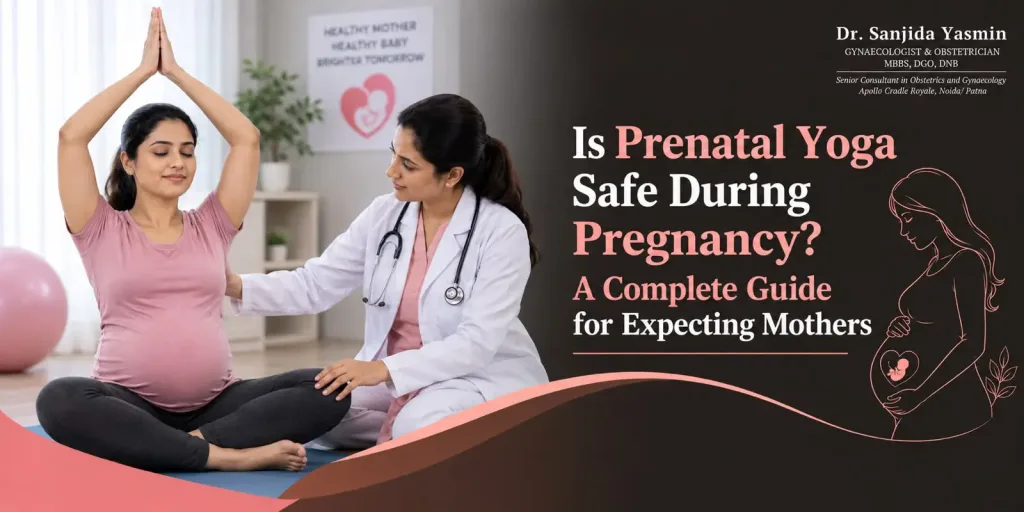

Pregnancy is a time of major physical and emotional changes. As the body adapts to support the growing baby, many women look for gentle ways to stay active, manage stress, and maintain mobility. Prenatal yoga is one option that can be considered as part of a healthy pregnancy routine.
So, is prenatal yoga safe during pregnancy? For many women with an uncomplicated pregnancy, appropriately modified prenatal yoga can be a safe form of pregnancy exercise. However, the right level and type of activity depend on your health, trimester, fitness level, and pregnancy-related factors. It is always advisable to discuss exercise with your gynecologist before starting or changing your routine.
For women seeking personalized Pregnancy & Maternal Care in Delhi, Dr. Sanjida Yasmin provides pregnancy and antenatal care with an individualized approach to women’s health. She is a Gynaecologist & Obstetrician with MBBS, DGO and DNB qualifications and more than 19 years of experience.
Is Prenatal Yoga Safe During Pregnancy?
Yes, prenatal yoga can be suitable for many pregnant women when it is appropriately modified and medically appropriate for their pregnancy. It is designed to use gentle movements, stretching, breathing, and relaxation techniques while taking the physical changes of pregnancy into account.
However, prenatal yoga is not automatically safe for every woman. A pregnancy may require exercise restrictions because of certain medical conditions, pregnancy complications, or other individual concerns.
Before beginning prenatal yoga during pregnancy, speak with your gynecologist. This is particularly important if you have a high-risk pregnancy, previous pregnancy complications, significant medical conditions, or have been advised to restrict physical activity.
The goal should not be to achieve difficult yoga poses. Instead, pregnancy yoga exercises should focus on comfortable movement, controlled breathing, stability, and relaxation.
What Is Prenatal Yoga?
Prenatal yoga is a modified form of yoga designed specifically for pregnant women. It differs from some conventional yoga classes because poses, intensity, positioning, and use of props can be adapted as pregnancy progresses.
A pregnancy-focused yoga session may include:
- Gentle stretching
- Comfortable mobility exercises
- Supported standing movements
- Breathing exercises
- Relaxation techniques
- Posture and body-awareness exercises
- Pregnancy-appropriate modifications
Prenatal yoga should respect your changing balance, growing abdomen, energy levels, and physical comfort.
You should also tell your instructor how far along you are in your pregnancy and whether your doctor has given you any exercise restrictions.
Potential Benefits of Prenatal Yoga During Pregnancy
When medically appropriate, prenatal yoga may be a useful part of a broader pregnancy exercise routine.
1. Supports Gentle Physical Activity
Staying physically active during pregnancy can help maintain general fitness. Prenatal yoga offers a low-impact option for women who prefer gentle movement.
2. Encourages Flexibility and Mobility
Gentle movements can help you maintain comfortable mobility as your body changes. However, pregnancy is not the time to force deep stretches or compete for flexibility.
3. Promotes Relaxation
Pregnancy can sometimes feel physically and emotionally demanding. Slow movements, controlled breathing, and relaxation exercises may help create a calmer exercise experience.
4. Improves Body Awareness
As your abdomen grows, your posture and balance change. Prenatal yoga can encourage awareness of how your body moves and where you feel comfortable.
5. Supports Breathing and Mindfulness
Many prenatal yoga sessions incorporate controlled breathing and mindfulness. These practices can help you focus on slow, comfortable breathing and relaxation.
6. Helps Maintain an Active Lifestyle
Depending on your health and your doctor’s recommendations, prenatal yoga can be combined with other suitable activities such as walking or swimming.
The important point is that yoga is one part of pregnancy care, not a replacement for regular antenatal care or medical monitoring.
Which Yoga Poses Are Generally Considered Safer During Pregnancy?
No yoga pose is universally safe for every pregnant woman. A movement that feels comfortable for one woman may not be appropriate for another.
Generally, a prenatal yoga instructor may use gentle and supported movements such as:
- Modified cat-cow movements
- Supported standing exercises
- Gentle pelvic mobility
- Comfortable seated stretches
- Gentle hip mobility
- Supported relaxation positions
- Pregnancy-appropriate breathing exercises
Props such as cushions, blocks, bolsters, and chairs may make movements more comfortable and stable.
The most important rule is: do not force your body. If a pose creates pain, pressure, dizziness, unusual breathlessness, or discomfort, stop the movement.
Yoga During the First, Second and Third Trimesters
Your prenatal yoga routine may need to change throughout pregnancy because your body changes significantly from one trimester to another.
|
Trimester |
What changes |
What the routine should focus on |
|
First trimester |
Nausea, tiredness, dizziness, breast tenderness |
Starting gradually, avoiding overheating and dehydration |
|
Second trimester |
Growing abdomen, changing centre of gravity |
Stability, comfort, avoiding pressure on the abdomen |
|
Third trimester |
Balance and range of movement are affected |
Supported movement, mobility, relaxation and breathing |
Yoga During the First Trimester
During the first trimester, some women experience nausea, tiredness, dizziness, or breast tenderness. If you were already physically active, you may be able to continue suitable activity after discussing it with your healthcare provider.
If you are new to exercise, start gradually rather than suddenly beginning an intense yoga routine.
Avoid overheating and dehydration, and listen to your body’s signals. If you feel unusually tired or unwell, take a break.
Yoga During the Second Trimester
During the second trimester, the abdomen begins to grow and your center of gravity changes. Some positions that were comfortable earlier may become less comfortable.
Yoga during the second trimester should therefore focus on stability, comfort, and appropriate modifications.
Avoid movements that put excessive pressure on the abdomen or make you feel unstable. As pregnancy progresses, prolonged positions lying flat on your back may also need to be avoided or modified.
Yoga During the Third Trimester
Yoga during the third trimester should generally become more focused on comfortable movement, mobility, relaxation, and breathing rather than challenging poses.
The growing abdomen can affect balance and range of movement. Supported exercises may therefore become more practical.
Do not try to maintain your pre-pregnancy flexibility or perform advanced poses if they no longer feel comfortable.
Yoga Poses and Practices to Avoid During Pregnancy
Some yoga practices may need to be avoided or modified during pregnancy.
These include:
- Hot or heated yoga sessions
- Exercises with a high risk of falling
- Advanced balance poses without pregnancy-specific guidance
- Movements that create excessive abdominal pressure
- Deep twists that cause discomfort
- Highly strenuous or exhausting routines
- Prolonged positions that are uncomfortable
- Exercises that make breathing difficult
- Breath-holding during movement
- Any pose that causes pain, dizziness, or unusual discomfort
The aim of prenatal yoga is not to push through discomfort. Your routine should be adjusted as your pregnancy progresses.
When Should You Avoid Prenatal Yoga or Seek Medical Advice?
Some symptoms during pregnancy require you to stop exercising and seek medical advice.
Contact your healthcare provider promptly if you experience:
- Vaginal bleeding
- Severe abdominal or pelvic pain
- Dizziness or fainting
- Chest pain
- Significant difficulty breathing
- Fluid leakage from the vagina
- Painful or regular contractions
- Significant weakness or loss of balance
- Any unusual symptom that concerns you
If you notice reduced fetal movement when you would normally expect regular movement, contact your maternity care provider rather than continuing your exercise session.
Women with high-risk pregnancies may also require individualized exercise recommendations. Dr. Sanjida Yasmin provides High Risk Pregnancy Management in Delhi alongside pregnancy and antenatal care, allowing exercise and lifestyle advice to be considered within the wider context of an individual pregnancy.
How to Practice Prenatal Yoga Safely
If your gynecologist has cleared you for exercise, follow these practical precautions:
Consult Your Gynecologist
Before beginning prenatal yoga, discuss your plans during an antenatal appointment. Your doctor can help determine whether exercise is appropriate for your pregnancy.
Choose a Qualified Prenatal Yoga Instructor
Work with an instructor who understands pregnancy-specific modifications. Inform them about your trimester and any restrictions recommended by your doctor.
Stay Hydrated
Drink adequate fluids and take breaks whenever needed.
Avoid Overheating
Choose a comfortable, well-ventilated environment. Avoid hot yoga and strenuous exercise in excessive heat.
Use Supportive Props
Blocks, bolsters, cushions, and chairs can improve stability and comfort.
Focus on Comfort
Pregnancy is not the time to force a deeper stretch. Stay within a comfortable range of movement.
Avoid Holding Your Breath
Breathing should remain steady and comfortable during exercise.
Adapt Your Routine
A movement that feels comfortable in the first trimester may not be suitable later. Modify your practice as your pregnancy progresses.
Stop If Something Feels Wrong
Pain, dizziness, bleeding, fluid leakage, unusual breathlessness, or other warning signs should not be ignored.
How a Gynecologist Can Guide Exercise During Pregnancy
Regular antenatal care is an important part of a healthy pregnancy. Your gynecologist can assess your medical history, pregnancy progress, symptoms, and individual needs before providing advice about physical activity.
If you are searching for the Best Gynecologist in Delhi, look for a qualified professional who provides personalized pregnancy care rather than following a one-size-fits-all approach.
Dr. Sanjida Yasmin is a Gynaecologist & Obstetrician with MBBS, DGO and DNB qualifications and 19+ years of experience. Her practice focuses on personalized, compassionate and evidence-based women’s healthcare. Her listed services include Pregnancy & Maternal Care, High-Risk Pregnancy Management, Normal Delivery Care and Antenatal Care Services.
Her approach begins with consultation and evaluation, followed by diagnosis and treatment planning and ongoing follow-up. This type of individualized care can help women understand which lifestyle and exercise choices are appropriate for their pregnancy.
Prenatal Yoga as Part of Pregnancy & Maternal Care in Delhi
Prenatal yoga should be viewed as one component of comprehensive pregnancy care.
Effective Pregnancy & Maternal Care in Delhi may involve:
- Regular antenatal consultations
- Monitoring maternal health
- Monitoring fetal growth and wellbeing
- Recommended pregnancy tests and scans
- Nutrition and lifestyle guidance
- Appropriate pregnancy exercise advice
- Management of pregnancy-related concerns
- High-risk pregnancy monitoring when required
- Delivery planning
- Postpartum guidance
Dr. Sanjida Yasmin offers pregnancy and maternal care along with antenatal care and high-risk pregnancy management. Her practice is focused on providing individualized care based on a woman’s medical history and pregnancy needs.
Why Choose Dr. Sanjida Yasmin for Pregnancy Care?
Choosing the right gynecologist is an important decision during pregnancy. Women often want a doctor who combines clinical expertise with clear communication and personalized attention.
Dr. Sanjida Yasmin’s practice highlights:
- 19+ years of experience in women’s healthcare
- Qualifications including MBBS, DGO and DNB
- Pregnancy and maternal care
- Antenatal care services
- High-risk pregnancy management
- Normal delivery care
- Personalized consultation and treatment planning
- Ongoing follow-up and patient support
Her stated approach emphasizes compassionate, ethical and evidence-based gynecological care, with attention to each patient’s individual needs.
Conclusion
Prenatal yoga can be a safe and beneficial form of pregnancy exercise for many women when it is appropriately modified and approved by a healthcare professional. Gentle movements, breathing exercises, and relaxation techniques may help support comfort, mobility, and emotional well-being during pregnancy. However, every pregnancy is different, so exercises should always be adapted according to your trimester, health, and individual pregnancy needs.
If you are considering prenatal yoga or making changes to your exercise routine, consulting a qualified gynecologist can help you understand what is appropriate for your pregnancy. Dr. Sanjida Yasmin provides personalized antenatal, pregnancy, and maternal care based on each woman’s individual needs.
Frequently Asked Questions
1. Is prenatal yoga safe for all pregnant women?
No. Prenatal yoga may be appropriate for many women with uncomplicated pregnancies, but some women may need exercise restrictions or individualized medical advice.
2. Can I do yoga during the first trimester?
Many women can continue or begin gentle exercise during the first trimester if their healthcare provider considers it appropriate. Beginners should start gradually and avoid excessive exertion or overheating.
3. Which yoga poses should be avoided during pregnancy?
Avoid poses that cause pain, abdominal pressure, dizziness, instability, or breathing difficulty. Hot yoga and activities with a significant risk of falling should also be avoided.
4. How often can I practice prenatal yoga?
The appropriate frequency depends on your health, pregnancy, previous activity level, and overall exercise routine. Your gynecologist or qualified prenatal instructor can help you choose an appropriate schedule.
5. Can beginners start prenatal yoga during pregnancy?
Yes, some beginners can start gentle prenatal yoga. It is advisable to discuss your plans with your gynecologist and choose an instructor experienced in pregnancy-specific modifications.
6. Is prenatal yoga safe during the third trimester?
Prenatal yoga may remain suitable for many women during the third trimester, but exercises usually need to be modified for comfort, balance, and the growing abdomen.
7. Should I consult a gynecologist before starting prenatal yoga?
Yes. Medical guidance is particularly important if you have a high-risk pregnancy, medical condition, pregnancy complication, or have been advised to restrict physical activity.
8. When should I stop exercising during pregnancy?
Stop exercising and seek medical advice if you experience symptoms such as vaginal bleeding, severe pain, dizziness, chest pain, significant breathing difficulty, fluid leakage, or painful contractions.