Many women don’t realise that the pain they go through every month is not always “normal.” They manage it with painkillers, rest, or just by getting used to it.
But when the pain keeps getting worse, or starts showing up even on normal days, it’s usually a sign that something deeper needs attention.
Endometriosis is one such condition. It often goes unnoticed in the beginning, especially because its symptoms overlap with common menstrual discomfort. By the time it gets diagnosed, it may already be affecting daily life or even fertility, making timely endometriosis treatment in Delhi extremely important.
If you’re living around Hauz Khas and dealing with this kind of discomfort, it’s worth getting it properly evaluated instead of ignoring it.
Inside the uterus, there is a lining that builds up and sheds every month. In endometriosis, tissue similar to that lining starts growing outside the uterus.
This tissue can attach itself to places like the ovaries or nearby pelvic areas.
Now the tricky part — it behaves exactly like normal lining. It reacts to hormones, thickens, and breaks down during the cycle. But since it’s outside the uterus, it has nowhere to go.
That’s what leads to pain, swelling, and sometimes internal scarring over time.
Every woman experiences it differently, but there are some patterns doctors often hear:
A common thing patients say is – “This doesn’t feel like my usual period pain.” That instinct is often right.
Not always, but it can.
In some cases, it stays mild for years. In others, it gradually becomes more intense. Doctors may label it in stages, but honestly, the level of discomfort doesn’t always match the stage.
Someone with an early stage may feel severe pain, while another with a more advanced stage might not notice much initially.
That’s why listening to your body matters more than anything else.
Most commonly, it affects:
Rare cases can involve other parts of the body, but that’s not very common.
Treatment is not the same for everyone. It depends a lot on how your body is responding and what your future plans are.
Some women manage well with medication that helps control pain and hormones.
Others may need a small procedure called laparoscopy. It’s minimally invasive and helps remove the unwanted tissue. Many patients feel significant relief after it, especially when pain has been ongoing.
In more complicated cases, treatment becomes more detailed and needs careful planning.
There is no fixed formula here.
Before deciding anything, a doctor will usually look at:
The idea is not just to treat the condition, but to make sure your everyday life becomes easier.
This condition often needs follow-ups. It’s not a one-time visit situation.
So if your clinic is around Hauz Khas, it makes things much more manageable. You don’t delay appointments, and staying consistent with treatment becomes easier.
And in conditions like this, consistency really matters.
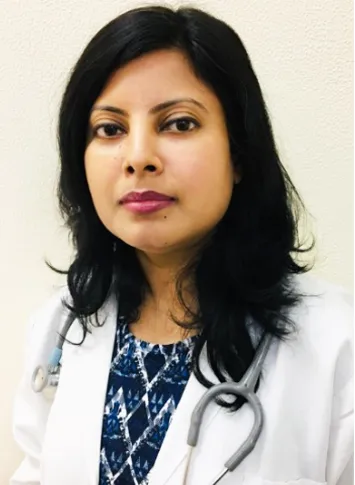
Dr. Sanjida Yasmin works with many patients who come in after months—or sometimes years- of dealing with unresolved symptoms.
Her approach is simple: understand what’s actually going on before jumping into treatment.
Some patients need medication. Some need monitoring. Others may need a procedure. The plan changes from person to person.